


There is a moment , often subtle, almost invisible, when a room begins to feel complete.
Not simply furnished.
Not merely decorated.
Complete.
Sometimes that feeling comes from the way natural light enters through a window in the early morning. Sometimes from silence. Sometimes from the balance between empty space and carefully chosen objects.
And sometimes, unexpectedly, it comes from the photograph hanging on the wall.
At first glance, a poster and a fine art print may appear surprisingly similar. They can display the same landscape, the same black and white image, even the same composition.
Yet once placed inside a living space, they rarely create the same emotional presence.
The difference is not only technical.
It is atmospheric.
A poster usually fills a wall.
A fine art print often changes the way the room feels.
This distinction becomes increasingly important in contemporary interiors, where photography is no longer treated as simple decoration but as part of the emotional architecture of a space.
In many homes today, people are searching for more than visual impact. They are searching for calmness, texture, authenticity, connection with nature, and a slower, more intentional atmosphere.
And this is exactly where the conversation around poster vs fine art print becomes meaningful.
1. Poster vs Fine Art Print: Why This Comparison Matters
We live surrounded by images. Every day we consume photographs continuously through phones, social media, screens, advertisements, and digital environments. Most images disappear almost instantly from memory.
But the photographs we decide to place inside our homes behave differently.
A printed image becomes part of everyday life. It changes with the morning light. It accompanies silence, conversations, routines, seasons, and moods.
Over time, some images slowly disappear into the background.
Others become part of the identity of a room.
This is where the distinction between a decorative poster and a fine art photographic print begins to matter.
Not because one is automatically “better” than the other, but because they are created with entirely different intentions.
A poster is usually designed for accessibility and immediate visual effect.
A fine art print is designed for permanence, atmosphere, and emotional depth.
The difference may seem subtle at first. But inside carefully designed interiors, the impact becomes surprisingly clear.
Especially in spaces built around:
- natural materials
- minimalist architecture
- quiet lighting
- calm visual balance
- intentional living
In these environments, photography is no longer just decoration.
It becomes part of the atmosphere itself.
2. What Defines a Poster
A poster is typically created for large-scale reproduction and affordability. It is often printed quickly using standard commercial printing methods on lightweight paper designed primarily for visual accessibility.
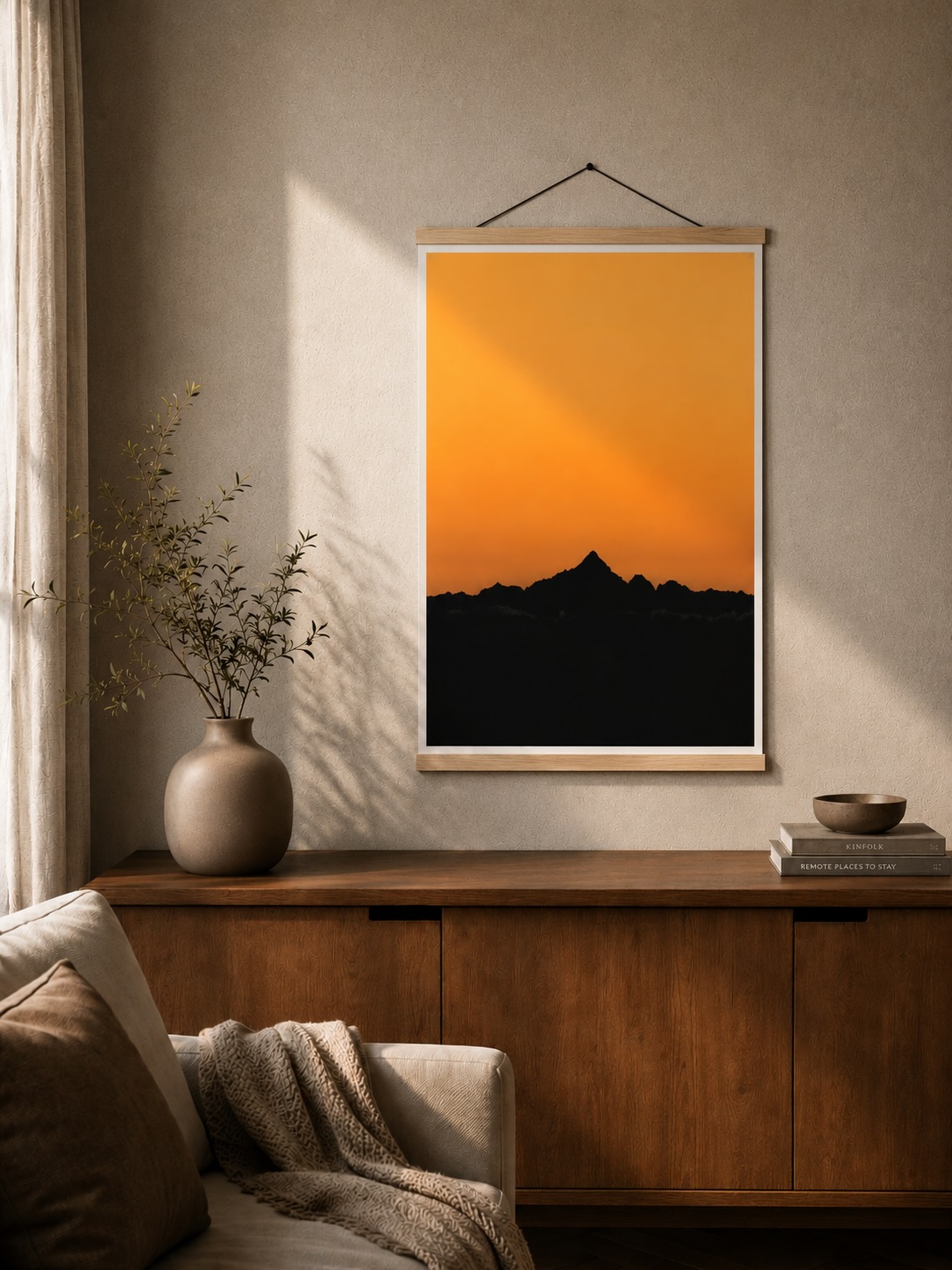
Posters are popular because they are affordable, versatile, easy to replace, visually immediate and widely available.
And there is absolutely nothing wrong with that. In many interiors, posters work beautifully.
They are ideal for:
- temporary homes
- student apartments
- creative studios
- casual spaces
- trend-driven decoration
- youthful interiors
A poster introduces personality quickly and easily. It can bring color, energy, graphic presence, or cultural references into a room without requiring a significant investment.
Its role is primarily decorative, but posters are rarely designed to become long-term objects.
The paper quality is usually thinner. The tonal depth is often compressed. The surface tends to prioritize brightness and reproduction speed over subtlety.
Posters are generally created to be consumed visually rather than experienced materially. You look at them. You do not necessarily live with them.
3. What Makes a Fine Art Print Different from a Poster
A fine art print is created with a completely different philosophy.
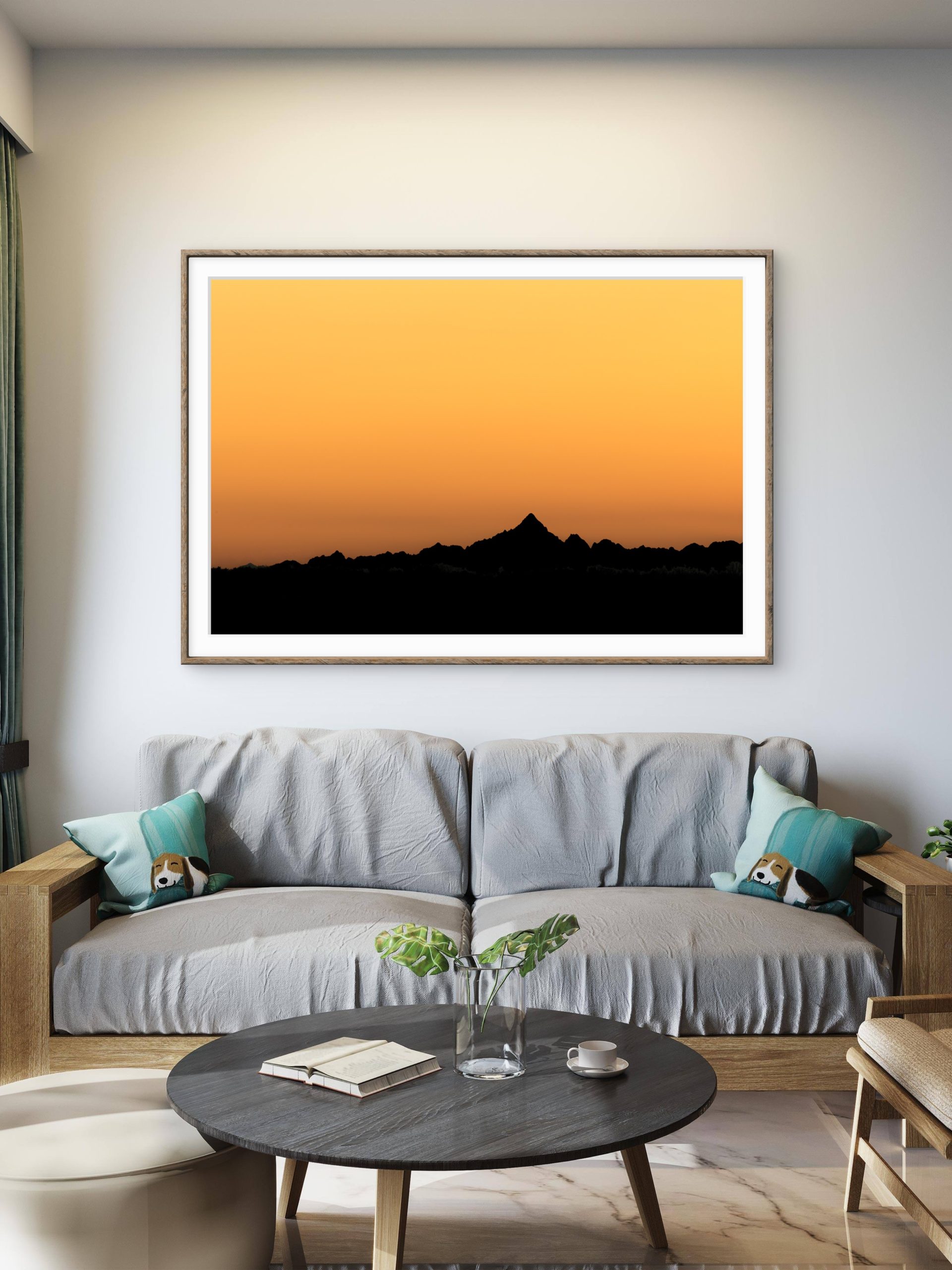
The photograph itself matters, of course but equally important are the paper, the texture, the printing process, the tonal depth, the longevitiy and the deep relationship between light and surface.
Fine art photographic prints are typically produced using:
- archival pigment inks
- museum-quality papers
- carefully calibrated color management
- high-resolution printing methods designed to preserve detail and tonal subtlety
But technical quality alone does not explain why fine art prints feel different inside a room. The deeper difference is emotional.
A fine art print invites slower attention, it creates presence rather than immediate impact.
Especially in landscape photography, minimal photography, or nature-inspired imagery, the material qualities of the print become inseparable from the image itself.
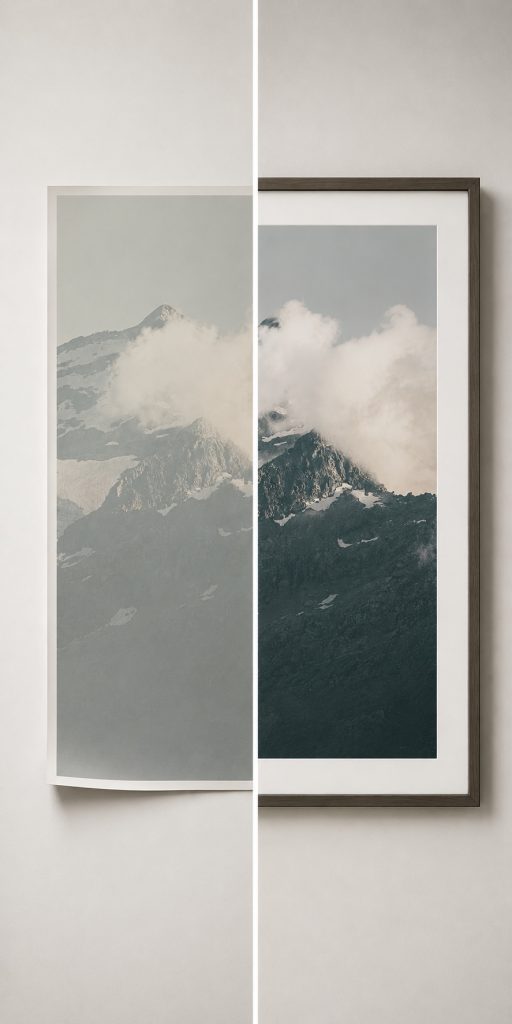
Soft cotton paper, such as Hahnemühle Photo Rag® absorbs light differently. Matte surfaces reduce visual noise. Textured papers create depth that changes throughout the day as light shifts naturally inside the room.
4. The Difference You Actually Notice Inside a Room
The most important difference between a poster and a fine art print is rarely visible in an online product photo.
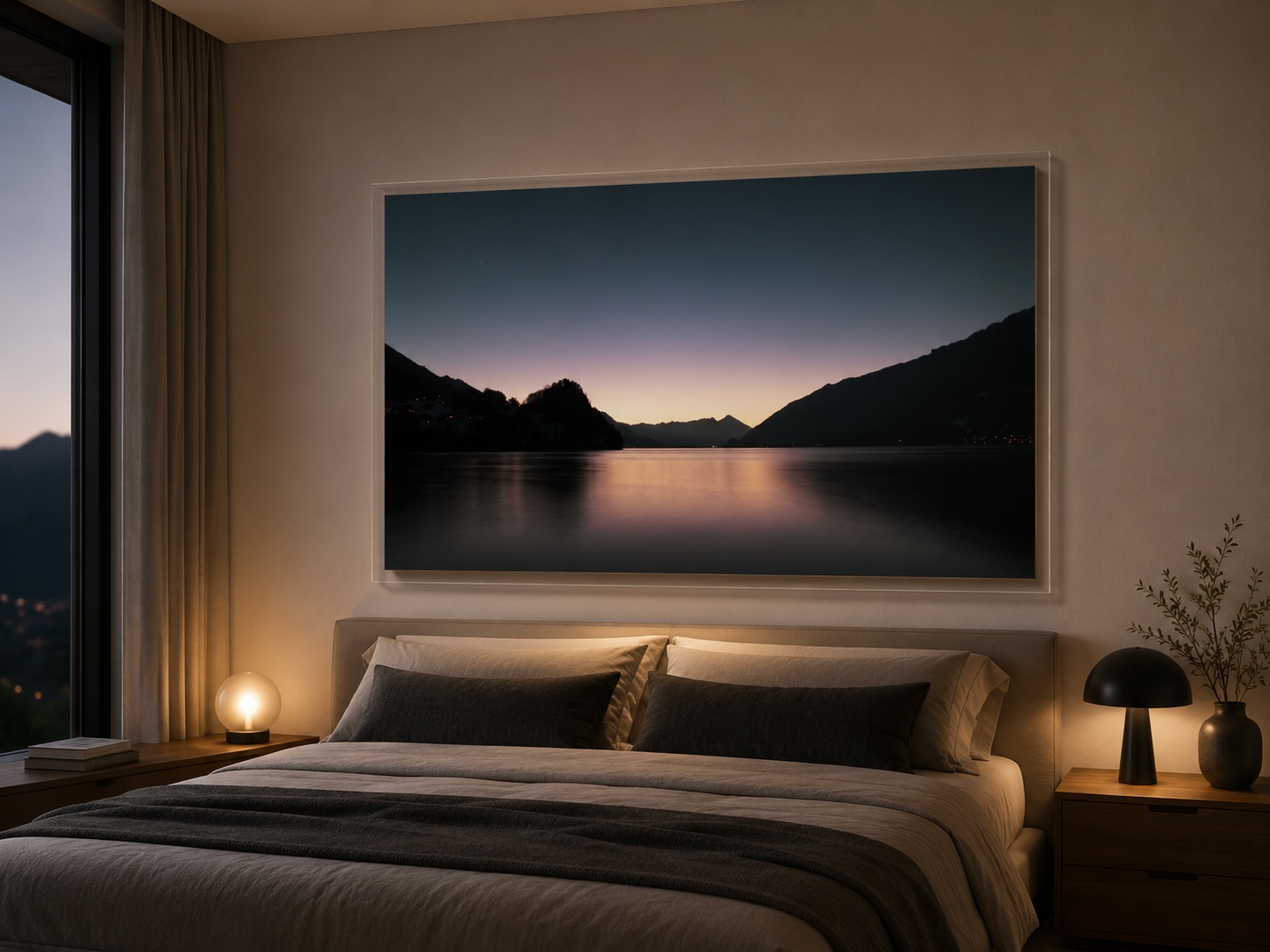
It becomes visible only with time. A poster usually behaves like decoration, a fine art print behaves more like presence.
At first, the difference may appear subtle but over days, weeks, and months, small details begin shaping the emotional experience of the room itself.
A carefully printed landscape photograph can introduce calmness into a minimalist interior.
A monochrome mountain scene can create visual silence.
A photograph with delicate fog, soft water reflections, or natural textures begins interacting with the architecture around it instead of simply sitting on the wall.
This is particularly noticeable in interiors designed around:
- neutral tones
- wood textures
- natural light
- Scandinavian minimalism
- Japandi aesthetics
- and modern organic interiors
In these environments, a fine art print does not dominate the room, it breaths with it and this changes the emotional perception of the space far more than many people initially expect.
5. Materials, Texture and the Importance of Light
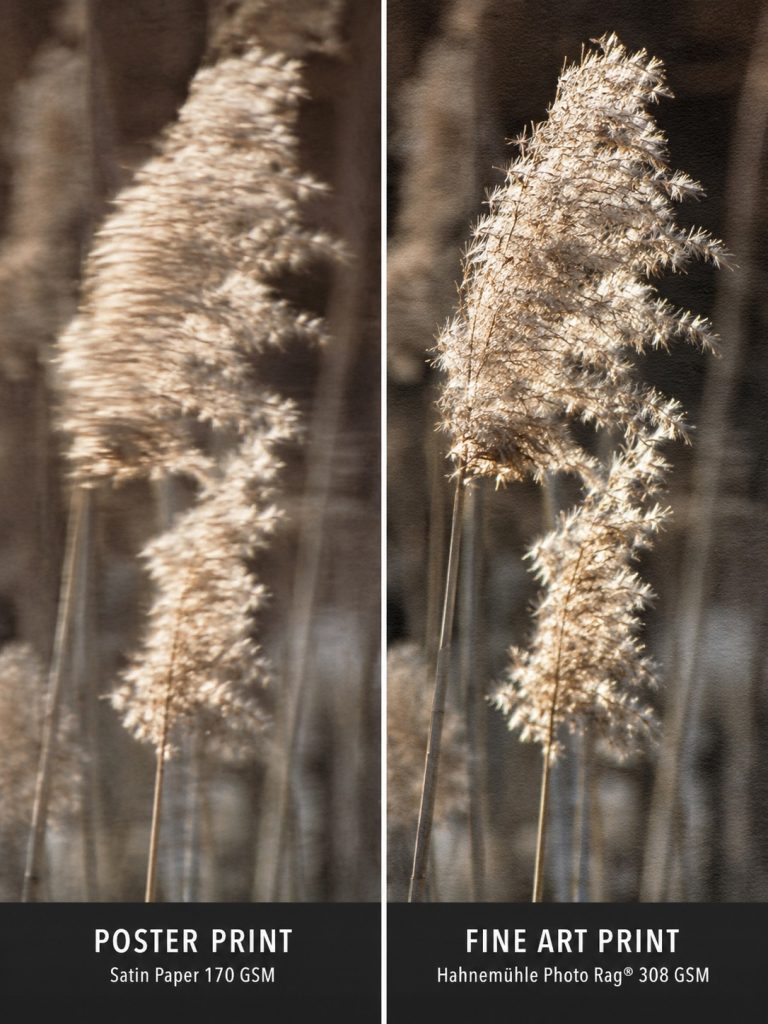
One of the least discussed aspects of photographic wall art is how materials interact with light.
Most posters are printed on glossy or semi-gloss commercial paper designed to increase contrast and color intensity quickly.
Under direct light, however, glossy surfaces often produce reflections that partially obscure the image itself.
In calm interiors, this can create visual noise.
Fine art papers are selected much more carefully according to the intended atmosphere.
Some papers diffuse light softly.
Others enhance depth in shadows.
Others preserve delicate transitions between tones in a way that feels almost painterly.
The surface becomes part of the visual experience.
A textured cotton paper, for example, absorbs light gently and creates softness that changes throughout the day.
Morning light may reveal texture differently from evening light.
This dynamic relationship between image and environment is one of the reasons why fine art prints feel more alive inside a space.
Photography is never only the image itself.
It is also: material, scale, texture, framing and light.
When these elements work together harmoniously, the photograph stops behaving like decoration and starts becoming atmosphere.
6. Longevity and Archival Quality
Another major difference between posters and fine art prints is longevity.
Most posters are not designed to last for decades.
Over time:
- colors may fade
- contrast may weaken
- paper may warp
- glossy surfaces may deteriorate
Especially in rooms exposed to sunlight, these changes can appear relatively quickly.
Fine art prints, on the other hand, are usually produced using archival materials specifically chosen for durability and long-term stability.
Archival pigment inks combined with museum-grade papers are designed to preserve tonal quality for many years when properly framed and protected.
But longevity is not only a technical matter.
It also changes the emotional relationship we develop with the object itself.
A poster often feels temporary.
A fine art print feels intentional.
It becomes something chosen carefully — something meant to remain part of the environment over time.
Almost closer to architecture or furniture than to simple decoration.
And in a culture increasingly dominated by disposable visual consumption, permanence itself begins to carry emotional value.
7. Emotional Value vs Decorative Function
A poster usually answers a decorative need.
A fine art print often answers something quieter and more personal.
Connection.
Stillness.
Atmosphere.
Memory.
This becomes especially powerful with landscape photography and nature-inspired imagery.
A carefully photographed and printed landscape can create a sense of openness inside dense urban environments.
A forest scene may introduce calmness.
A minimalist seascape may create breathing space.
A monochrome mountain image may add silence and visual depth to an otherwise busy room.
These emotional effects are difficult to measure technically, yet they are immediately perceptible experientially.
And unlike trend-based decoration, meaningful photographic prints often become stronger with time.
The more we live with them, the more layers we begin noticing.
Details emerge gradually:
- texture in the clouds
- movement in water
- quiet transitions of light
- atmospheric depth
- emotional resonance
This slower relationship is one of the defining qualities of fine art photography.
It asks for attention without demanding it.
8. When a Poster Makes Perfect Sense
Not every interior requires permanence or emotional depth.
And not every wall needs a museum-quality print.
There are many situations where posters are exactly the right choice.
For example:
- temporary apartments
- rapidly changing interiors
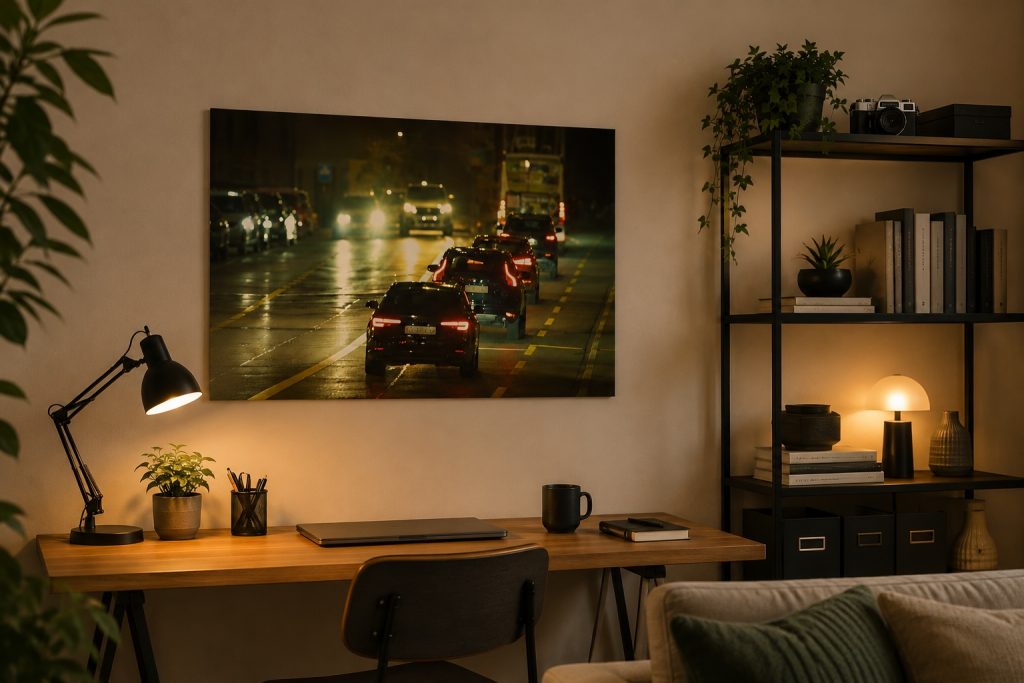
- creative workspaces
- informal environments
- student rooms
- seasonal decoration
- graphic-focused interiors
Posters allow flexibility.
They are easier to replace, experiment with, and adapt to trends or personal changes.
In vibrant and energetic interiors, that immediacy can feel refreshing rather than limiting.
The important point is not that posters are inferior.
The important point is understanding what role the image is expected to play inside the space.
Decoration and atmosphere are not always the same thing.
9. When a Fine Art Print Truly Transforms a Space
A fine art print becomes meaningful when the goal is not simply visual decoration, but emotional atmosphere.
This is particularly true in interiors designed around:
- calmness
- natural light
- slow living
- intentional minimalism
- architectural simplicity
- emotional balance
- connection with nature
In these environments, photography can profoundly influence the perception of the room.
A carefully printed landscape does more than occupy visual space.
It changes the rhythm of the environment itself.
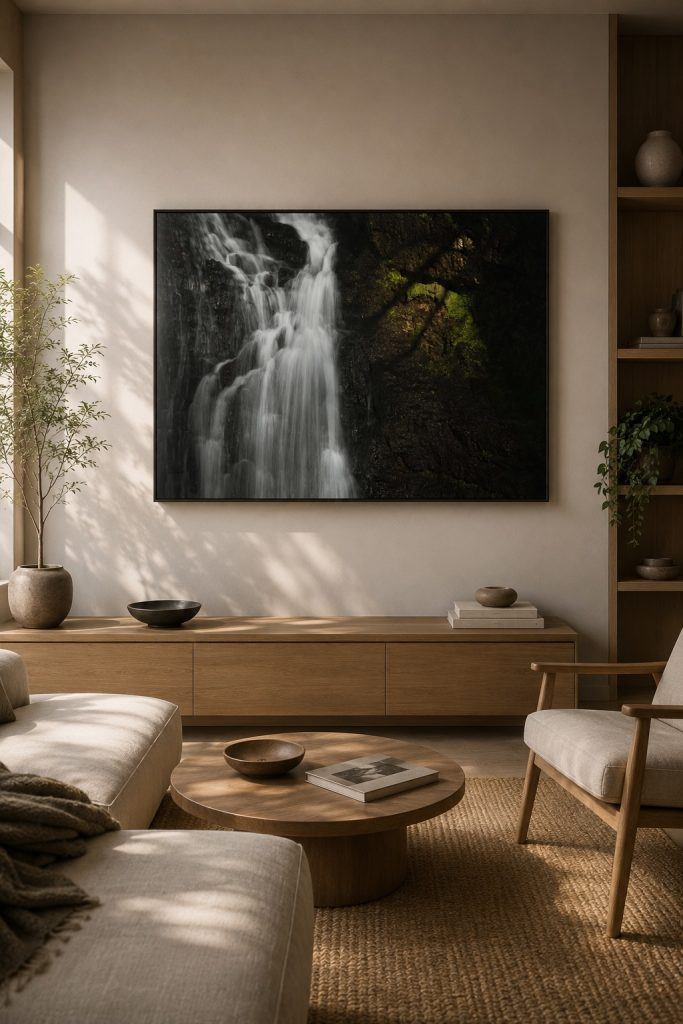
This is especially noticeable with large-format fine art photography, where the image begins interacting directly with architecture and scale.
A quiet mountain scene can make a room feel more open.
A minimalist waterfall can reduce visual tension.
A forest photograph can introduce softness into modern interiors dominated by concrete or stone.
These are subtle transformations, but they affect how people emotionally experience a space every day.
And unlike aggressive decoration trends, quiet atmosphere tends to age beautifully.
10. How to Choose the Right Print for Your Interior
The best choice depends less on trends and more on the relationship you want to create with the image.
Before choosing between a poster and a fine art print, it can help to ask a few simple questions:
- Do I want temporary decoration or long-term presence?
- Am I looking for visual impact or emotional atmosphere?
- How important are texture and material quality in this room?
- Does the photograph reflect the feeling I want the space to hold?
- Will this image still resonate with me years from now?
There is no universally correct answer.
Some interiors benefit from spontaneity and flexibility.
Others benefit from quiet permanence.
But when photography becomes part of the emotional architecture of a room, material quality begins to matter far more than people initially expect.
A meaningful fine art print does not need to dominate a space.
Sometimes its role is quieter than that.
Sometimes the best photographic works simply alter the emotional temperature of a room almost invisibly — through texture, light, stillness, and depth.
And often, that difference becomes more noticeable with time.
If you would like to understand how a photograph could actually look inside your own space, you can also try the Wall Preview Tool, designed to help visualize fine art prints directly within different interior environments before making a decision.
FAQ
| Are fine art prints worth it? If you value longevity, atmosphere, material quality, and emotional presence inside a space, fine art prints offer a very different experience from standard posters. Why are fine art prints more expensive? The price reflects archival papers, pigment inks, carefully controlled printing processes, and smaller-scale production focused on quality rather than mass reproduction. Do fine art prints last longer than posters? Yes. Properly produced archival fine art prints are designed to preserve tonal richness and color stability for many years. Can posters still look beautiful in interiors? Absolutely. Posters work very well in informal, temporary, youthful, or trend-oriented interiors where flexibility matters more than permanence. What makes a photographic print feel premium? Paper texture, tonal depth, archival quality, framing, scale, and the interaction between light and surface all contribute to a more refined visual presence. |
Final Thought
If you are looking for photography that becomes part of the atmosphere of a space, not simply decoration. A carefully crafted fine art print offers something deeper than visual impact alone.
It introduces texture, silence, light, and emotional presence into everyday life.
And often, those are the details that truly transform a room.


