Sometimes a room needs only one decision. When people search for large wall art for living rooms, they often imagine a statement, something bold and immediate. I think of something else: an anchor. A large print can give a living room structure, depth and a calm center. Not by shouting, but by holding space with clarity.
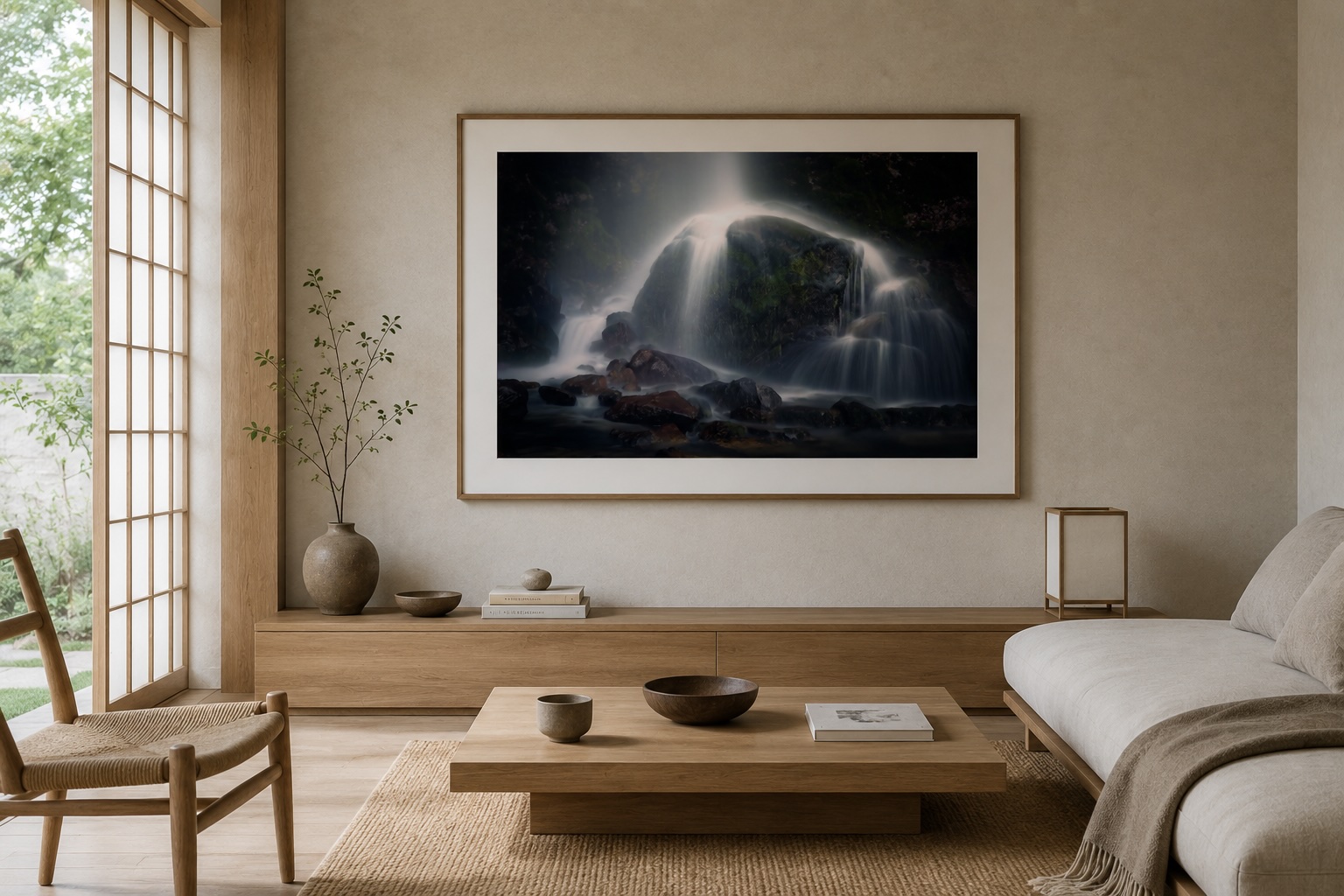
In the living room that opens this article, the print becomes a kind of interior horizon. The bright opening in the image invites the eye to enter, then pauses it. Light and shadow move across the wall during the day, and the photograph learns to cooperate with them. Over time, the room feels less like a container and more like a place with its own breath.
Scale, silence and balance are the three ideas I return to when I hang a large photograph at home or in a client’s space. Scale sets the rhythm, silence slows the eye, and balance helps the photograph integrate with furniture, materials and light. Together, they let a single image carry the room without taking it over.
Scale becomes quiet when it carries the weight of space, not attention.
1. An Anchor, Not A Shout
The most generous role a large photograph can play in a living room is to become the room’s anchor. An anchor is different from a focal point. A focal point asks for attention. An anchor offers stability. When a print carries architectural depth or a clear sense of space, the wall gains structure and the furniture around it relaxes.
I have learned to trust one strong image instead of many small decorations. The eye finds rest in a single coherent presence. Over time, this reduces visual noise and restores the rhythm of the room. You may not notice this change immediately, but you feel it when you sit down, when you read, when conversations pause and the room holds the quiet.
This anchor quality is not about size alone. It emerges from proportion, from how the image meets the wall, the sofa, the negative space around it and the light shifting through the day. If the photograph understands the room and the room understands the photograph, scale becomes a form of kindness.
2. Proportion And The Courage To Leave Space
A large print does not need to dominate the room to be present. Proportion matters more than measurements. Above a low cabinet or a long sofa, I look for a balance between the width of the furniture and the width of the frame. When the print is too small, the wall feels unresolved; too large and the wall stops breathing.
What helps is the courage to leave space around the image. Negative space is not emptiness. It is the silence that lets the photograph speak without raising its voice. In calm interiors with natural wood and pale tones, generous margins around a dark, atmospheric image can feel almost meditative. You perceive the artwork as part of the architecture, not as an object applied to it.
I often stand back and watch how the image meets the edges of the wall and the lines of the furniture. If the print carries its own gravity and there is room for that gravity to expand, the wall reads as one complete thought.
3. Silence As A Design Quality
Silence is rarely discussed in interiors, yet it is one of the strongest qualities a large photograph can add to a living room. I do not mean the absence of sound. I mean the kind of visual quiet that slows the eye. A quiet image reshapes time inside a room.
People sometimes worry that larger scale will bring more energy and intensity. In my experience, the opposite can be true. A large, restrained image allows for slower looking. Details unfold over days and weeks: tonal transitions, texture in shadows, the way a bright area breathes inside a darker field. This unhurried discovery is where the emotional life of a print begins.
When silence becomes part of the room’s language, other choices follow more easily: softer materials, fewer objects, light that can move without resistance. The photograph does not demand attention every minute. It simply holds the space available for attention whenever you return to it.
4. When A Cloud Holds The Room Quietly
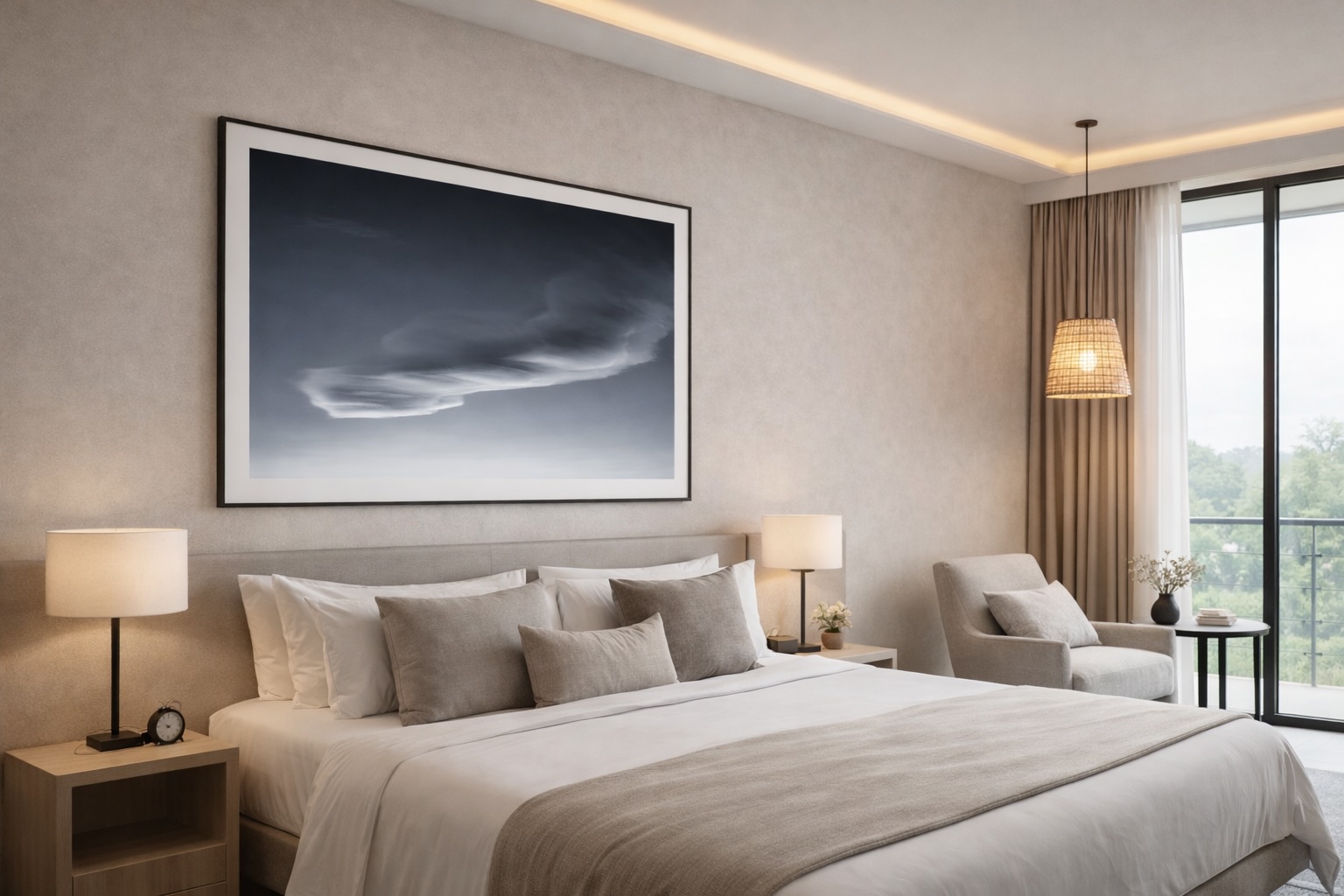
Images of sky often feel larger than their dimensions. A well-balanced cloud photograph can introduce depth and calm without adding visual noise. The softness of form, the diffusion of light and the continuum of tones help a room slow down.
I have placed cloud prints in living areas where the day needed a gentler rhythm. The effect is not decorative. It is atmospheric. The print becomes a window into distance, but a quiet distance—one that does not compete with conversation or reading. Large scale here is a gift: it lets the eye rest in the softness rather than scanning for detail.
If your living room already speaks in a soft palette, consider how a cloud image would behave with your textiles and light. The photograph should not overpower fabric textures, but echo them—linen, wool, sand-colored walls. When these elements agree, the room feels coherent in a way that words seldom explain.
5. Balance With Furniture And The Rhythm Of The Wall
I try to read a wall the way I read a landscape: as an arrangement of weights, lines and pauses. A sofa, a cabinet, a lamp—each carries visual weight. The photograph should meet that weight and organize it rather than compete with it. If the sofa is long and low, a wide print with room to breathe above and to the sides will usually feel grounded. If the furniture is compact, a vertically oriented image may lift the wall and bring a quiet sense of height.
Hanging height is less about rules and more about conversation. I often start near eye level when seated, then test by stepping back across the room. The artwork should be in relationship with how the room is actually used. If most time is spent sitting, the center of the image can drop slightly; if the room is walked through often, a slightly higher position can feel natural.
A useful way to check balance is to soften the room mentally until only shapes remain. If the photograph, furniture and negative space align into a calm rhythm, scale is serving the room.
6. Material Honesty: Frame, Mat And The Way A Print Feels
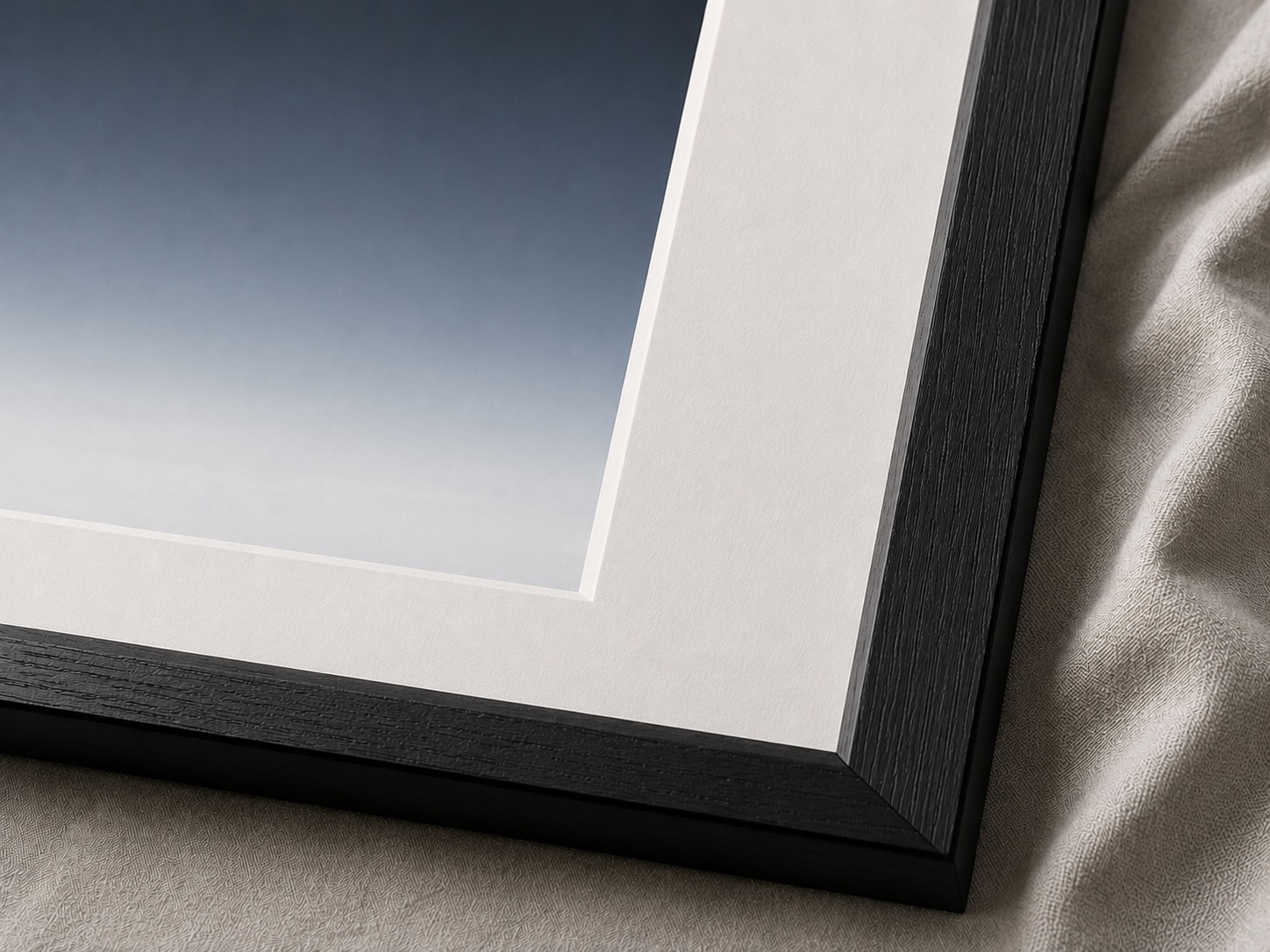
The difference between a fine art print and generic decoration often appears at the edges—how the frame touches the image, how the mat opens a pause, how the paper receives light. These details are not embellishments. They are part of the photograph’s voice in the room.
I tend to favor simple, well-made frames with a tactile surface. A black textured wooden frame can echo the depth of an image without demanding attention. A white mat creates breathing room between the photograph and its boundary, allowing tones to settle. The mat is a form of silence; it protects the print visually so that light can unfold gently across the surface.
Paper matters to the feeling of scale. A soft, matte or gently textured paper will often read as quieter in a living room than a high-gloss surface. It receives light rather than reflecting it back at you. At large sizes this becomes essential: you are no longer looking at an object on the wall but at a presence that shares the room.
7. One Image Instead Of Many
I am often asked whether a gallery wall or a single large image is better in a living room. Both can be beautiful, but they create different kinds of time. A gallery wall invites the eye to move quickly through multiple small stories. One large image invites you to enter one story with more patience.
In rooms where life already carries many rhythms—family, music, conversation—I prefer one image as a stabilizing center. There is a softness in not having to choose where to look. The photograph becomes a pause within the room’s movement, and the other elements around it can relax.
If you feel the urge to add more images beside a large print, try waiting. Live with the single image for a few weeks. Often the room becomes complete, and the desire for more turns into the pleasure of enough.
8. When Water, Mist And Wood Agree
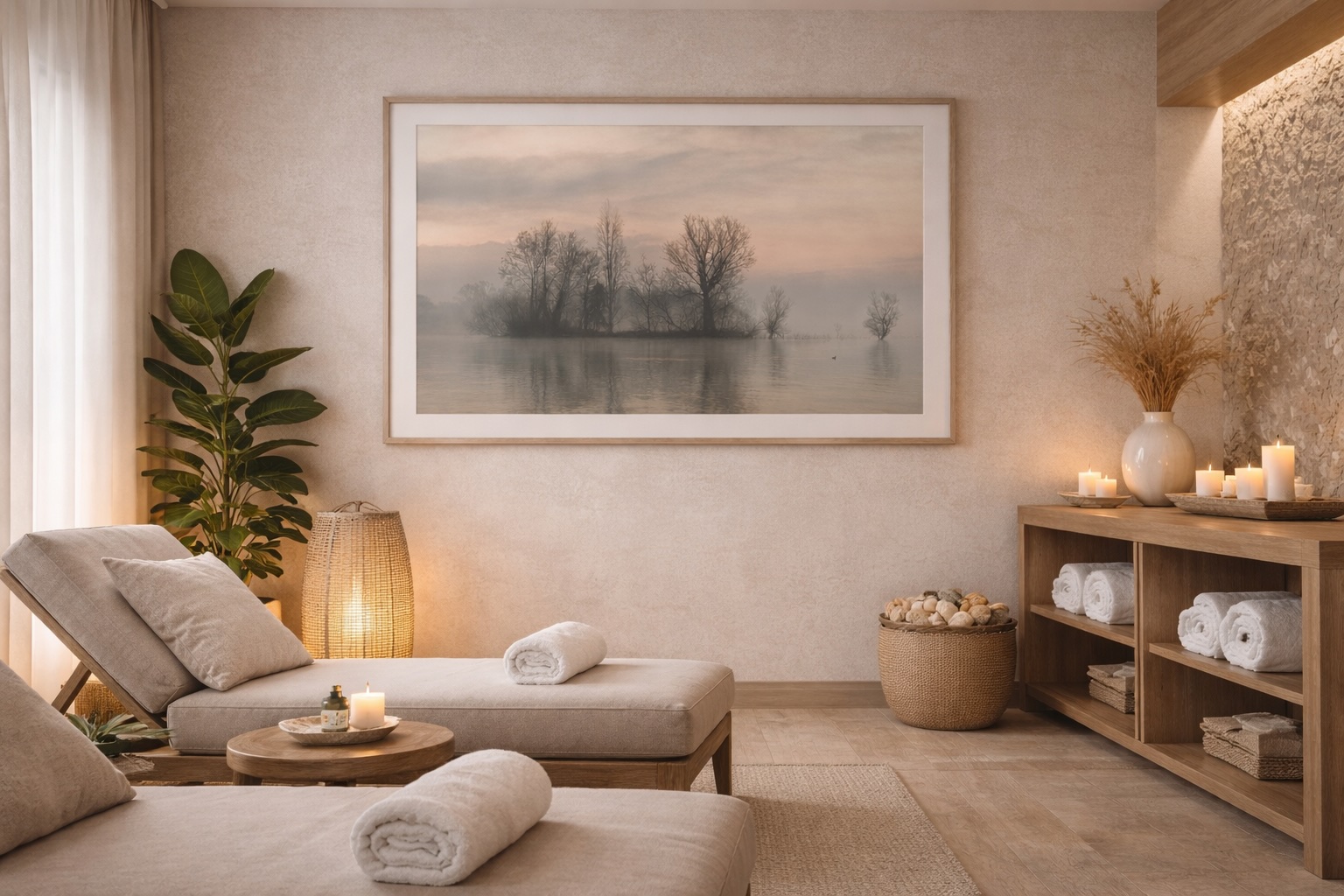
Large prints harmonize most easily when the subject and the materials of the room speak the same language. Mist over water, bare winter trees, warm neutrals and natural textures can create an intimate stillness. Candles, woven textiles and wood do not decorate the image; they listen to it and it listens back.
In spaces designed for restoration—a corner for reading, a place to breathe after work—the photograph should not command attention. It should welcome it. The scale gives the room a clear center while the palette and texture keep the atmosphere gentle. You notice the room more than the object, which is often the quiet goal.
When the print, the wall color and the materials agree, balance happens without force. The image does not need to prove anything. It settles in, and the living room begins to feel like it has always been arranged around this conversation.
See the Artwork on Your Own Wall
Choosing the right print size can be difficult when viewing artwork online. With the Wall Preview Tool ,you can upload a photo of your room and visualize the artwork directly on your wall. This makes it easier to compare sizes, evaluate placement, and select the print that best fits your space.
FAQ
|
How large should a print be above a sofa? Think in relationships, not rules. I usually aim for a print width that feels coherent with the sofa—often between half and two-thirds of its length—while keeping generous negative space around the frame. Step back, look at the whole wall, and choose the size that lets the room breathe. |
|
Will large wall art overwhelm a small living room? Not if the image is quiet and the proportions are kind. One large, restrained photograph can make a small room feel calmer than several smaller decorations. The key is generous negative space, a balanced hanging height, and an image whose tone complements the room’s materials and light. |
|
How high should I hang a large print in a living area? Begin near seated eye level and adjust with how you use the room. If most time is spent sitting, let the image drop slightly. If people often walk through, a little higher can feel natural. What matters is the relationship to furniture lines and the way the image reads across the room. |
|
Which frames and mats suit calm contemporary interiors? Simple, tactile frames—black or natural wood—pair well with quiet photographs. A white mat opens a pause between image and frame and helps tones settle. Choose finishes that receive light gently rather than reflect it. The frame and mat should support the print’s voice, not compete with it. |
|
Is one large photograph better than a gallery wall for living rooms? They create different experiences. A gallery wall encourages quick looking and variety. One large photograph offers a calm center and slower time. If your living room already carries many rhythms, a single large print often brings balance and presence without adding visual noise. |
Final Thought
A large photograph can be a quiet architecture within the room: not a monument, but a place to rest your eyes and thoughts. When scale, silence and balance meet—when the frame listens, when light is gentle, when furniture and image settle into rhythm—the room begins to hold time differently. You sit, and the day loosens its urgency. The image is there, steady and patient, and the living room quietly becomes itself.
If these reflections resonate, the Between Worlds collection continues this conversation through images shaped by stillness, distance and light.